
Why Daily Sunscreen Matters When You Have Dark Spots on Brown and Black Skin
By the Ozentya team ·
If you are working on dark spots, you have probably heard the advice a hundred times: wear sunscreen every day. It can feel like the boring part of a routine, especially if you have been told that deeper skin tones do not need it. The truth is more nuanced, and it matters a great deal if you want your skin to look more even over time.
This guide explains why daily sun protection is so important when you have dark spots, what to look for in a sunscreen, and how to fit it into your routine without a chalky finish.
What dark spots are, and why the sun gets involved
Dark spots are areas where your skin has produced extra melanin, the pigment that gives skin its colour. Common triggers include:
- Breakouts and pimples that leave a mark once they calm down
- Irritation, scratching, shaving bumps or picking
- Hormonal changes
- Repeated sun exposure over the years
Melanin-rich skin is often very responsive to inflammation and to light. That is why a small mark can stay visible for a long time, and why it can look darker after a sunny week.
UV light is one of the main signals that tells pigment-producing cells to get to work. If you expose a dark spot to the sun day after day, it can look deeper or more noticeable, and it can seem to take longer to look lighter. Sunscreen does not change the spot itself. What it does is limit one of the factors that keeps pushing pigment production.
Does Black and brown skin really need sunscreen?
Yes. Natural melanin offers some protection, but it is not a complete shield. Darker skin tones can still be affected by UV rays, and sun exposure can still contribute to uneven tone, dryness and premature signs of ageing. Skin cancers are less common in deeper skin tones, but they do occur and are often noticed later, which is another reason to protect your skin and to have any unusual changes checked.
The idea that "my skin is dark, so I do not need SPF" is one of the most common reasons dark spots seem to hang around. If you are using a dark spot product and skipping sunscreen, you are working against yourself.
Why consistency matters more than intensity
The sun does not only reach you at the beach. Exposure builds up in small amounts through:
- Your walk to the bus stop or the car
- Sitting by a window at home or at work
- Driving
- Cloudy days, because a large share of UV still passes through cloud cover
- Winter days, especially when it is bright and cold
One unprotected afternoon can undo some of the effort you put in during the week. That is why dermatologists usually recommend sunscreen as a daily habit, not a summer-only product.
How to choose a sunscreen when you have dark spots
Here is what to look for:
- Broad-spectrum protection. This means the product protects against both UVA and UVB rays.
- SPF 30 or higher. This is the level most skin professionals recommend for daily use.
- A formula you enjoy wearing. The best sunscreen is the one you will actually apply every morning.
- Non-comedogenic wording if you are prone to breakouts, since new pimples can leave new marks.
Mineral or chemical filters?
Both can work. Mineral formulas (zinc oxide or titanium dioxide) can leave a grey or white cast on deeper skin, although many brands now offer tinted versions made for brown and Black skin. Chemical (organic) filters are usually lighter and more transparent, but some people find them irritating around the eyes or on sensitive skin. If one does not suit you, try the other style rather than giving up on sunscreen altogether.
Tips to avoid a white cast
- Look for tinted mineral formulas, gels, fluids or milky textures
- Warm the product between your fingers before pressing it into the skin
- Apply in thin layers instead of one thick layer
- Let it settle for a few minutes before applying makeup or a head wrap
How to apply sunscreen properly
Most people apply less than they need. As a general guideline, use a generous amount for the face and neck, roughly a quarter teaspoon for the face alone. Do not forget:
- The ears, the sides of the neck and the back of the neck
- The hairline, temples and the top of the forehead
- The upper lip, where marks often show
- The backs of the hands
If you are outdoors for long periods, reapply about every two hours, and after sweating or swimming. A hat or cap, sunglasses and some shade add useful extra protection. Your scalp and hair also feel the sun, especially along parts, thin areas and edges. For ideas, see our guide on protecting your hair from sun, cold and chlorine.
Where sunscreen fits with a dark spot serum
A dark spot serum and sunscreen are a team. The serum is there to help reduce the appearance of dark spots and support a more even-looking tone over time, while sunscreen helps you avoid giving your skin a fresh reason to produce pigment.
A simple morning order looks like this:
- Gentle cleanser
- Serum
- Moisturiser
- Sunscreen as the final step
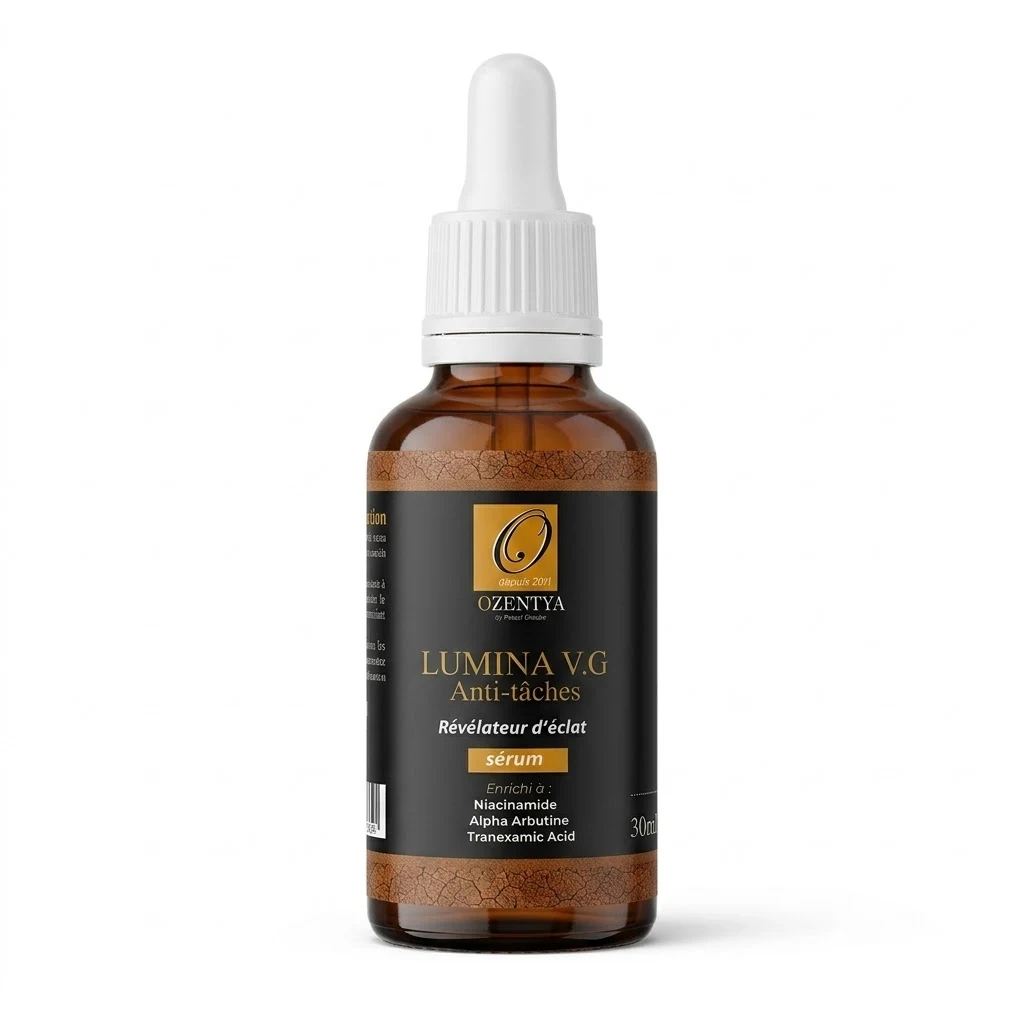
If you are looking for a serum to use in that routine, the Lumina V.G Dark Spot Serum — Ozentya is a 30 ml face serum formulated with niacinamide, alpha-arbutin and tranexamic acid. It is designed to help reduce the appearance of dark spots and give a more even-looking tone. Results vary from person to person, and daily sunscreen is essential while you use it. Always follow the directions on the packaging, and stop and seek advice if your skin becomes uncomfortable.
Habits that help your spots look better, not worse
Sunscreen is the foundation, but a few other habits make a difference:
- Do not pick or squeeze pimples. Picking creates inflammation, and that is a common route to new dark marks.
- Be gentle with exfoliation. Over-scrubbing can irritate the skin and leave it more reactive.
- Shave carefully. If you get razor bumps, use a clean blade and avoid shaving too close.
- Be patient. Dark spots usually take weeks or months to look different, and they may never look completely uniform.
- Protect after any irritation. A healing spot is especially sensitive to light, so be extra careful with sun protection.
When to see a dermatologist
An at-home routine is not the right answer for everything. Book an appointment with a dermatologist or your doctor if:
- A spot is changing in shape, colour or size, is irregular or has an uneven border
- A mark bleeds, itches, hurts or does not look like your usual spots
- Dark patches appear on both cheeks or the forehead and seem linked to hormones, pregnancy or medication
- Your spots seem to be spreading quickly
- You are unsure what is causing them
A professional can identify what you are dealing with and suggest an approach that suits your skin and health history.
The takeaway
If you remember one thing, make it this: a daily SPF is the habit that supports everything else you do for your skin. It will not make spots vanish overnight, and no product can promise that. But it helps protect your progress, and it helps keep new marks from appearing. Choose a formula you like, apply enough of it, reapply when you are outside, and give your routine time. For more answers on routines and products, you can also visit our FAQ.
Cosmetic skincare advice: it does not replace the opinion of a doctor or dermatologist. Results vary from person to person, and daily sunscreen is essential when you care for dark spots.
Frequently asked questions
Do I need sunscreen on cloudy days if I have dark spots?
Yes. A large share of UV rays passes through clouds, so exposure continues even when it does not feel sunny. Applying sunscreen every morning is simpler and more reliable than judging the weather.
Can sunscreen make dark spots look lighter by itself?
Sunscreen does not change the spot directly, but it helps limit sun exposure, which can make marks look more noticeable. Used consistently alongside a suitable routine, it supports a more even-looking tone. Results vary from person to person.
What SPF should I use for dark spots on brown or Black skin?
A broad-spectrum sunscreen with SPF 30 or higher is the usual recommendation for daily use. Pick a texture or tint that blends well on your skin so you will wear it every day, and reapply about every two hours when outdoors.
Should I apply sunscreen before or after my dark spot serum?
Apply your serum first, then moisturiser if you use one, and finish with sunscreen as the last step of your morning routine. This lets the serum sit on clean skin while the sunscreen forms the outer protective layer.