
How to Add a Dark Spot Serum to Your Skincare Routine, Step by Step
By the Ozentya team ·
You bought a dark spot serum, and now the real question starts: where does it go? Before or after moisturizer? Morning, night, or both? Getting the order right helps the formula sit well on your skin and keeps your routine simple enough to stick with. That consistency matters more than any single product.
Here is a clear, realistic way to build it into your day, whether you currently use five products or only a cleanser and a cream.
The short answer: the order of your routine
The general rule is to apply products from the lightest texture to the richest. A serum is thin and water-based, so it goes on after cleansing and before moisturizer.
Morning routine
- Step 1: Gentle cleanser (or just a rinse with lukewarm water if your skin is dry)
- Step 2: Dark spot serum
- Step 3: Moisturizer
- Step 4: Sunscreen, always last
Evening routine
- Step 1: Cleanser (twice if you wore sunscreen or makeup)
- Step 2: Dark spot serum
- Step 3: Moisturizer
Sunscreen is the final step in the morning because it needs to sit on top of your skin as a protective layer. Applying it under other products can disrupt that layer.
Why the serum goes on clean skin
A serum is designed to be applied directly to cleansed skin, with nothing heavy in the way. If you put a thick cream or oil first, the lighter product has a harder time spreading evenly, and you may end up wasting it.
Pat your face lightly after cleansing. Skin that is slightly damp, not dripping, usually feels more comfortable when you apply a serum. Then give it a minute or two to settle before you add moisturizer.
Morning, evening, or both?
There is no single correct answer, and it depends on your skin and on the instructions of the product you use. A few practical guidelines:
- Start with once a day. Many people find the evening easiest because there is no rush and sunscreen is not stacked on top right away.
- Move to twice a day only if your skin feels comfortable. If you notice tightness, stinging or redness, step back to once a day, or every other day.
- Stay consistent. Using a serum sporadically makes it hard to judge how your skin responds.
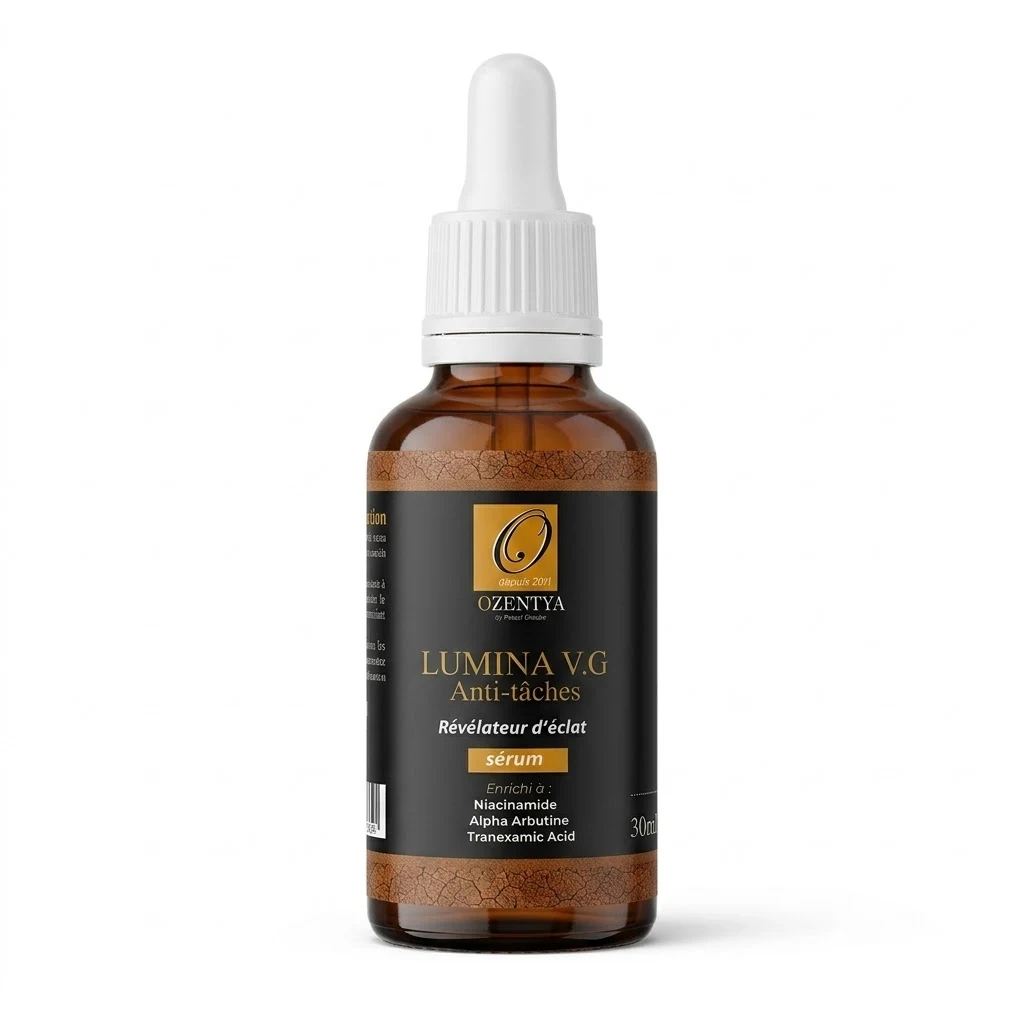
The Lumina V.G Dark Spot Serum — Ozentya is a 30 ml face serum formulated with niacinamide, alpha-arbutin and tranexamic acid, made to help reduce the appearance of dark spots and give a more even-looking tone. Follow the directions on the pack for the amount to use and how often.
How to apply it, step by step
- Wash and dry your hands, then cleanse your face.
- Pat your skin so it is clean and just slightly damp.
- Dispense a small amount and dot it over your face, or apply it to the areas where you see marks, then spread it gently. Avoid the eye contour and lips unless the instructions say otherwise.
- Smooth it in with light pressure. There is no need to rub hard. Friction can irritate skin and works against what you are trying to achieve.
- Wait a minute or two, then apply moisturizer.
- In the morning, finish with sunscreen.
Don't forget your neck and hands if you also have marks there and the product is suitable for those areas. If you are unsure, check the label.
Do a patch test and start slowly
Whatever your skin tone, a new active product deserves a patch test. Apply a small amount on the inner forearm or behind the ear for a day or two and watch for redness, itching or discomfort. If anything seems off, stop using it.
Then introduce it into your routine on its own. If you add a serum, a new cleanser and an exfoliating product in the same week and your skin reacts, you will not know the cause. One change at a time keeps things readable.
What about other active products?
If you already use retinol, exfoliating acids or other strong actives, take some care. Layering many active products can lead to dryness, stinging or irritation, and irritated skin is not a comfortable place to start.
- Alternate rather than stack. For example, use your dark spot serum in the morning and your other active in the evening, or use them on different nights.
- Keep the rest of your routine basic. A gentle cleanser, a moisturizer you tolerate well and sunscreen are enough to begin with.
- Pause if your skin feels sore. Skin that is peeling, burning or very red needs rest and simplicity, not more products.
If you are pregnant or breastfeeding, or you have a skin condition, ask your doctor or dermatologist before adding a new active product to your routine.
Sunscreen is not optional
If there is one point to remember from this guide, it is this one. Sun exposure can make dark spots look more pronounced, even on skin with a lot of natural melanin. Using a serum without daily sun protection is like bailing water out of a boat while the hole is still open.
- Apply sunscreen every morning, even in winter and on cloudy days in the UK, Canada or the northern US.
- Use enough, and reapply if you are outdoors for a long time.
- Choose a formula you will actually wear. Some sunscreens leave a white or gray cast on deeper skin tones. Look for ones that blend in or are labeled for deeper skin, and test a few until you find one you like.
- Remember the rest of the face, including your hairline, ears and temples.
If you also care for your edges and temples, our guide on edges and temples care is a good companion for protecting that area too.
Be patient, and keep expectations realistic
Skin takes time. Marks that built up over months rarely look different after a few days, and results vary from person to person depending on the type of marks, how long you have had them, your sun habits and how consistently you use your routine. A serum like this is meant to help reduce the *appearance* of dark spots and support a more even-looking tone, not to make marks disappear overnight.
A simple way to follow your progress:
- Take a photo in the same natural light at the start.
- Take another one every few weeks, with the same lighting and no filter.
- Judge by the photos, not by what you see in the mirror every morning.
Habits that can make marks look worse
- Picking at spots or pimples. This can leave marks that last longer than the blemish itself.
- Scrubbing hard. Rough exfoliation can irritate and darken the look of sensitive areas.
- Skipping sunscreen on "just a quick errand" days. Small exposures add up.
- Switching products every week. Your skin never gets a chance to settle.
When to see a dermatologist
A cosmetic serum is not meant for every skin concern. Make an appointment with a dermatologist if your patches are widening quickly, look uneven or raised, itch or hurt, bleed, or if a mark has changed in shape or color. The same applies if you are unsure what is causing your marks. A professional can give you a proper diagnosis, which a skincare routine cannot.
You can find answers to common questions about our products and orders on our FAQ page.
A simple routine to start with
If you want a plan to copy this week, here it is:
- Week 1: Patch test the serum. Keep your usual cleanser, moisturizer and sunscreen.
- Weeks 2 to 3: Use the serum once a day, in the evening, after cleansing and before moisturizer. Wear sunscreen every morning.
- After that: If your skin feels comfortable, you can consider adding a morning application. Keep an eye on how you feel, and scale back if needed.
Simple, steady and protected from the sun: that is the routine that gives a dark spot serum the best chance to do its job.
Cosmetic skincare advice: it does not replace the opinion of a doctor or dermatologist. Results vary from person to person, and daily sunscreen is essential when you care for dark spots.
Frequently asked questions
Do I apply dark spot serum before or after moisturizer?
Apply it before moisturizer, on clean and slightly damp skin. Serums are lighter than creams, so they go on first, and the moisturizer comes next to help your skin feel comfortable.
Can I use a dark spot serum in the morning and at night?
Many people start with once a day, often in the evening, then move to twice a day if their skin feels comfortable. Follow the directions on the pack, and if your skin feels tight or stings, go back to less frequent use.
Do I really need sunscreen with a dark spot serum?
Yes. Daily sunscreen is essential, because sun exposure can make dark spots look more pronounced and works against your routine. Apply it as the last step every morning, even on cloudy days.
How long before I see a difference?
It varies from person to person, depending on your marks, your sun habits and how regularly you use the serum. Take photos in the same light every few weeks to follow changes, and see a dermatologist if marks change or worry you.