
Post-Acne Dark Marks on Dark Skin: A Gentle Routine That Respects Your Skin
By the Ozentya team ·
You cleared the breakout, but the mark stayed. If you have brown or Black skin, you probably know this story well. A pimple fades, and a darker patch lingers where it used to be, sometimes for a long time.
The good news is that a calm, consistent routine can help the marks look less noticeable over time. The key word is gentle. On deeper skin tones, irritation is often what makes marks darker and last longer, so the goal is to support your skin, not fight it.
This guide explains why these marks happen, what a simple routine looks like, and which habits are worth dropping.
Why breakouts leave dark marks on deeper skin tones
When skin is inflamed, as it is during a breakout, it can respond by producing extra pigment in that area. This is often called post-inflammatory hyperpigmentation. On deeper skin tones, pigment-producing cells tend to react strongly, which is why a small pimple can leave a noticeable mark.
These marks are different from acne scars. A dark mark is a change of colour on a flat surface. A scar changes the texture of the skin, with dents or raised areas. This guide is about colour, not texture.
Three things tend to make marks look darker or last longer:
- Picking or squeezing, which adds more inflammation
- Harsh products or scrubs, which irritate skin that is already sensitive
- Sun exposure, which can make marks look deeper
The good news is that all three are within your control.
The gentle routine: morning
Keep the morning short. Three steps are enough.
1. Cleanse softly
Use a mild, non-stripping cleanser with lukewarm water. Skip rough washcloths and avoid scrubbing. If your skin feels tight or squeaky after washing, the cleanser is too harsh.
2. Moisturise
Acne-prone skin still needs moisture. When skin is dry and irritated, it is more reactive. Choose a light, non-greasy moisturiser that suits your skin, and apply it on slightly damp skin.
3. Sunscreen, every day
This is the step that matters most. Sun exposure can make dark marks look more pronounced, and it can work against everything else you do. Daily sunscreen is essential, even when it is cloudy, and even though deeper skin tones have more natural protection than lighter ones.
Look for a broad-spectrum SPF, and for a texture that does not leave a grey or ashy cast on your skin. Texture matters because the best sunscreen is the one you will actually wear every day. Reapply if you spend long hours outdoors.
The gentle routine: evening
Evening is when you can add a targeted step.
1. Cleanse
Wash off sunscreen, sweat and the day. If you wear sunscreen or makeup, a gentle first cleanse followed by your regular cleanser works well.
2. Add a dark spot serum
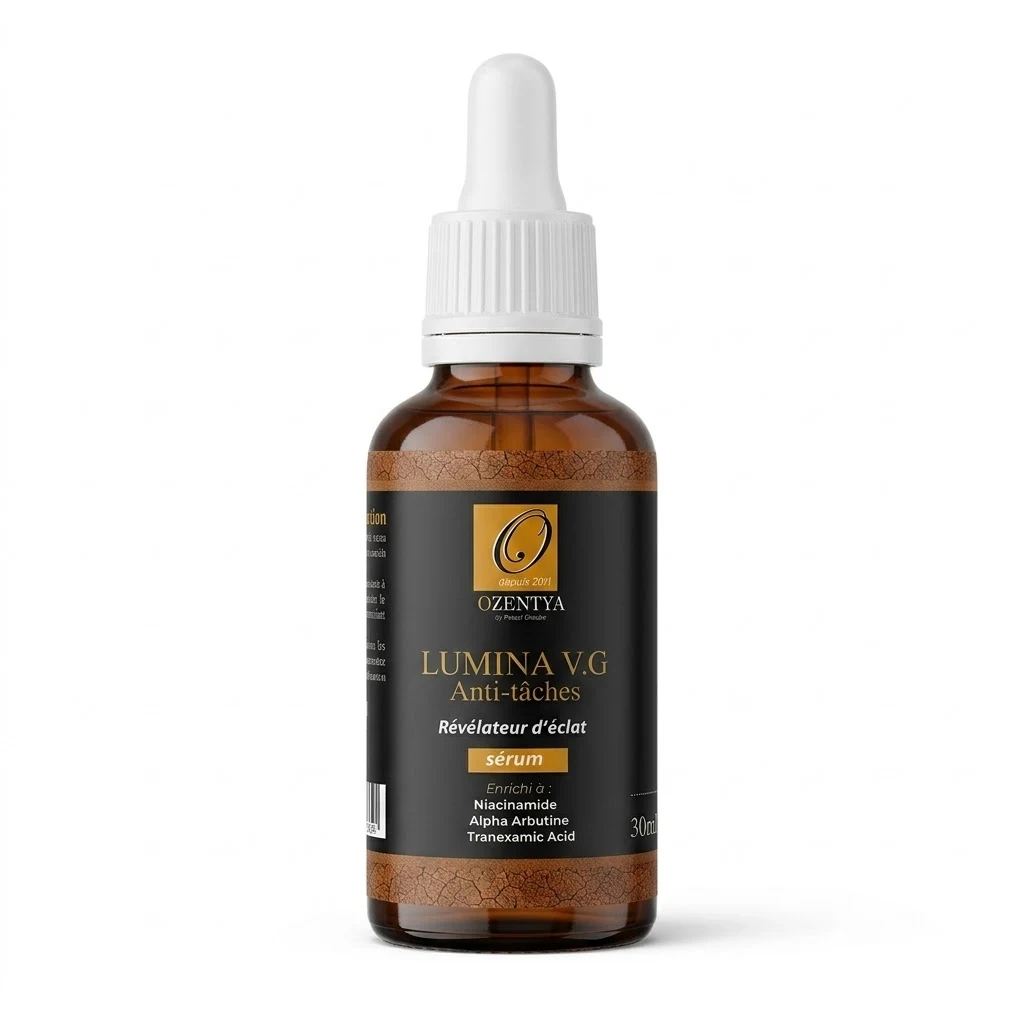
A serum made for dark spots can be a helpful part of your evening routine. Lumina V.G Dark Spot Serum — Ozentya is a 30 ml face serum that combines niacinamide, alpha-arbutin and tranexamic acid. It is designed to help reduce the appearance of dark spots and support a more even-looking tone.
A few practical tips for any serum like this:
- Patch test first. Try a small amount on the inner arm or behind the ear and wait a day before using it on your face.
- Start slowly. Use it a few evenings a week at first, then increase if your skin stays comfortable.
- Use a small amount. More product does not mean faster results, and it can mean more irritation.
- Apply to clean skin, then follow with moisturiser.
If you are pregnant or breastfeeding, or if you have a skin condition, ask a doctor or pharmacist before adding a new active product.
3. Moisturise
Finish with the same gentle moisturiser you use in the morning. A well-supported skin barrier tolerates active ingredients better.
What to stop doing
Some habits keep marks around longer than necessary. If you recognise yourself in this list, you are not alone. Many people have tried these at some point.
- Picking and squeezing. Every time you pick, you create new inflammation, which can mean a new mark. Hands off is the most useful rule.
- Lemon juice, baking soda, toothpaste and other DIY mixes. They can irritate the skin and may leave it darker or more sensitive. They are not worth the risk.
- Strong scrubs. Gritty scrubs can inflame skin and make marks look worse.
- Layering many actives at once. Several strong products together can overload your skin. Introduce one new product at a time.
- Skipping sunscreen because you are indoors or your skin is deep. Sun exposure can darken marks regardless of your skin tone.
- Skin-lightening products of unknown origin. If you cannot check what is in a product, do not put it on your face.
How long does it take?
Honestly, it depends. Marks vary in depth, how long they have been there, and how your skin responds. For many people, the change is gradual, and it is more about consistency over several weeks and months than about a quick fix. Results vary from person to person.
Take a photo in the same natural light once a month. Day-to-day changes are hard to see in the mirror, but a monthly photo makes your progress easier to notice.
A simple weekly rhythm
If you like having a plan, here is an easy one:
- Every morning: gentle cleanse, moisturiser, sunscreen
- Most evenings: gentle cleanse, serum (if your skin is comfortable with it), moisturiser
- If your skin feels irritated: pause the serum for a few evenings, keep only cleanser and moisturiser, and wait until the skin feels calm
Calm skin is your starting point. If your skin is red, stinging or peeling, the answer is almost never to add more products. It is to do less.
Do not forget the breakouts themselves
It is hard to fade marks if new breakouts keep appearing. Keep your gentle routine steady, avoid heavy products that clog your skin, and change pillowcases regularly. Wash your face after sweating, and keep your hair products away from your face and forehead where you can, because oils and styling products sometimes end up on the skin along the hairline.
If your breakouts are frequent, deep, or painful, the most useful step is to see a dermatologist. Treating the acne itself is what prevents new marks from forming.
When to see a dermatologist
Book an appointment with a dermatologist, ideally one with experience in skin of colour, if:
- Your acne is painful, deep or cystic
- You have raised scars or keloid-type scarring
- A mark is changing in shape, colour or size, or does not look like the others
- Your skin is burning, swelling or very itchy after using a product
- Your marks are widespread and you are unsure what is causing them
A professional can identify what you are dealing with and guide you safely. You can also find answers to common questions on our FAQ page.
The bottom line
Post-acne dark marks on dark skin are common, and they are not a sign that you are doing something wrong. A gentle cleanse, daily sunscreen, steady moisture and a targeted evening serum, combined with patience and no picking, give your skin the best chance to look more even over time. Go slowly, listen to your skin, and keep it simple.
Cosmetic skincare advice: it does not replace the opinion of a doctor or dermatologist. Results vary from person to person, and daily sunscreen is essential when you care for dark spots.
Frequently asked questions
Can I use a dark spot serum on post-acne marks if I still have pimples?
Many people do, but only if their skin is comfortable and not irritated. Patch test first, start a few evenings a week, and avoid applying it on open or very inflamed spots. If your skin stings or becomes red, pause it and ask a dermatologist for advice.
Do I really need sunscreen if I have deep skin?
Yes. Deeper skin has more natural protection, but it is not enough to prevent sun exposure from making dark marks look more pronounced. Daily sunscreen is an essential part of any routine for dark marks, and a formula without a white cast makes it easier to wear every day.
How long will it take for my acne marks to look less visible?
It varies from person to person, depending on the depth of the marks and how long they have been there. Most people notice changes gradually over weeks to months with a consistent routine. Results vary, so taking monthly photos in the same light can help you see progress.
Are lemon juice or baking soda good for dark marks?
No. These DIY ingredients can irritate the skin and may leave it darker or more sensitive. A gentle routine with sunscreen and products made for your face is a safer approach.